

Matoke, mosquitoes and visits to ministries
August 1, 2021 2024-11-06 11:55Matoke, mosquitoes and visits to ministries
Author: Eva-Maria Graf
Report Ruganda Rules – First insights from the AP Uganda/Rwanda:
On July 31st in the morning, the time had finally come: together we took the flight to Entebbe, Uganda, where we would spend the next few weeks. Entebbe has a population of around 70,000 and is located on a spit of land on Lake Victoria, one of the largest freshwater lakes in the world. When we arrived at night, we immediately noticed that the temperatures were no higher than when we left Germany, despite being so close to the equator. The reason for this is probably the altitude of 1100 m, which is probably why the mosquitoes bothered us less than we had feared.
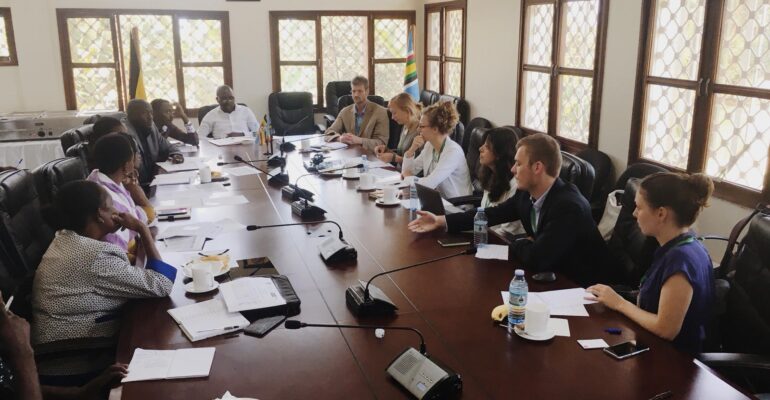
On the very second day, we left beautiful Entebbe behind us to visit the capital Kampala, 35 km to the north. After our driver had skillfully maneuvered us through the crazy left-hand traffic, the thousands of BoraBoras (motorcycles) and the exhaust fumes on the way to the GIZ headquarters, we quickly agreed that we were quite happy with our choice of Entebbe as a location for our research. The visit to the GIZ was to be the first of a number of so-called “courtesy visits” that we would undertake in the coming days to various departments of the ministries and project partners.
None of this would be possible without Zachary Kansiime, our local GIZ partner, who is there to help and advise us, even though his cell phone rings every ten minutes with an important call. In addition to the Ministry of Education, we also visited the Ministry of Agriculture in the first few days. As this is based in Entebbe, we decided to walk the 20 minutes there in the morning. When Zachary heard this, he looked at us in bewilderment and only understood that we weren’t joking after three confirmations. Zachary advised us to take a cab for shorter distances in future and didn’t want to hear anything about climate change and health. A great deal of importance is attached to formality here. Our team leader Klaus was also reprimanded by Zachary when he walked barefoot through the guesthouse.
One of Zach’s favorite hobbies is food. In this respect we can’t complain here, at almost every meeting – whether ministry or small farm – we were well fed. There are usually starch dishes in various shapes and colors: sweet potatoes, “normal” Irish potatoes and the must-eat “matoke”, i.e. plantain porridge. There are also often beans, rice, peanut sauce and meat. There is also fish near Lake Victoria, namely tilapia or Nile perch, which grows up to two meters long and is not actually native to this area. When it was released into Lake Victoria in the 1960s, it caused an ecological disaster as it hunted many other fish species and these disappeared. For the fishermen, however, it was a blessing in disguise, as Nile perch was easy to process and sell, providing an income for many.
As night falls here at 7 o’clock in the evening, we start our days early. There’s a lot to do: preparing for and following up on meetings and interviews, organizing trips, managing literature, developing matrices, designing questionnaires and writing protocols. After a week of shaking hands, we swapped our blazers for trekking shoes and headed out into the “field”, where we plunged into the expert and focus group interviews. First we went to an aqua farm that specialized in fish farming. Nelson, one of the trainees, explained to us that a female fish produces up to 50,000 eggs and showed us fingerlings (young fish) of different ages.
This was followed by several expert interviews with small and medium-sized enterprises involved in fish farming and processing as well as milk production. For one of these interviews, we drove to the Agricultural Training Center (ATC) in Bukalasa, which is located north of Kampala. The area is known for dairy production – on the way there we saw many goats, sheep and cows with strikingly long horns along the roadside. The company, which cooperates with the ATC, has taken on 40 interns, for whom a separate food hall was built just this year. In addition to milk production, mangoes and pineapples are also grown here, which were given to us as a gift and which we took home with us over the bumpy roads.
By now, returning to our guesthouse, having breakfast with the geckos and watching the sunset against the silhouettes of palm trees has become routine. The staff at the guesthouse are very friendly, watch Bollywood series in the evenings and hold a ceremony every Sunday in the room we use for work, where they sing for hours in the style of a Pentecostal church. Religion plays an important role in Uganda. We noticed this on the plane, where a nun was sitting, as well as in the ministry, where our visit was opened with a blessing.
On our few days off, we explored the immediate surroundings of Entebbe, such as the beach next to the airport, where you can climb around on disused airplanes. This is where “Operation Entebbe” took place in 1976, during which the Israeli military freed 200 hostages who had been held in the airplane terminal for several days. The then president and dictator Idi Amin cooperated with the hostage-takers, who were made up of members of the Palestine Liberation Front. Today, cardboard sculptures of various government representatives from different countries are placed on the site, including Barak Obama, some Ugandan officers and also Gandhi. The owner told us that he had put them up “to make every guest feel welcome”.
On another tour in the area, we followed the tracks of the shoebill, an almost extinct bird that lives to be 35 years old and only lays two eggs every five years. To do this, we took a boat on Lake Victoria to a bay surrounded by grasses and swamp, where after two hours we finally spotted one of the large gray birds with the broad beaks.
At the weekend we set off for Jinja, which lies at the mouth of the White Nile. We are looking forward to more adventures!
Eva-Maria Graf
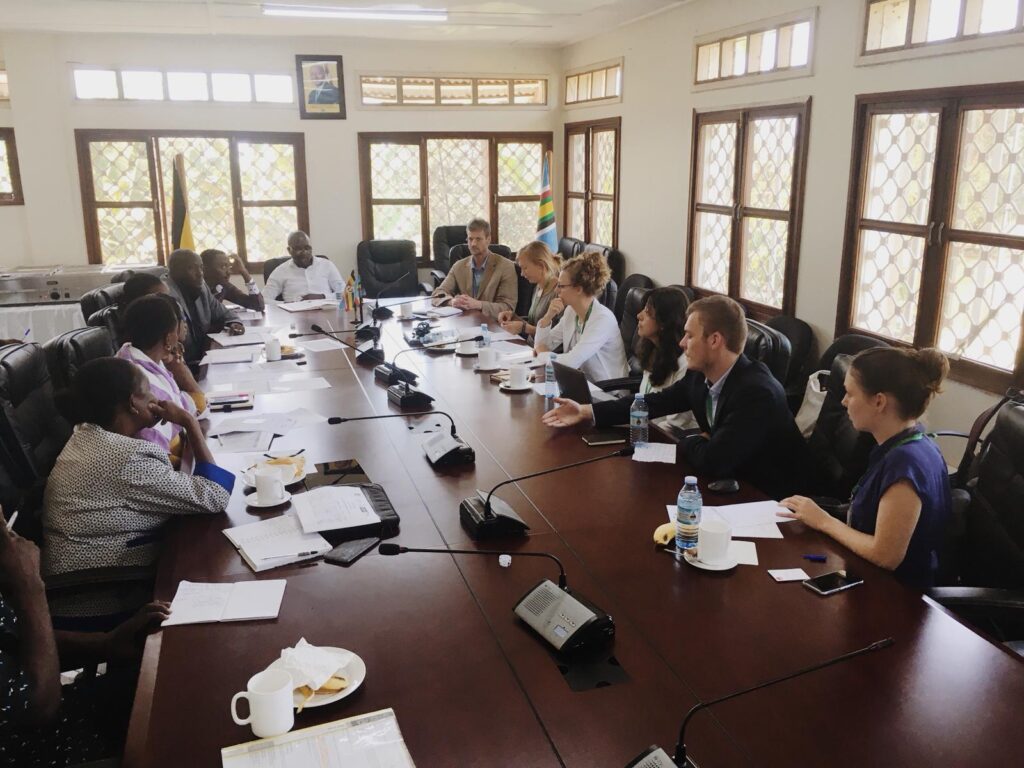
© SLE Courtesy visit to the Ministry of Agriculture, Entebbe
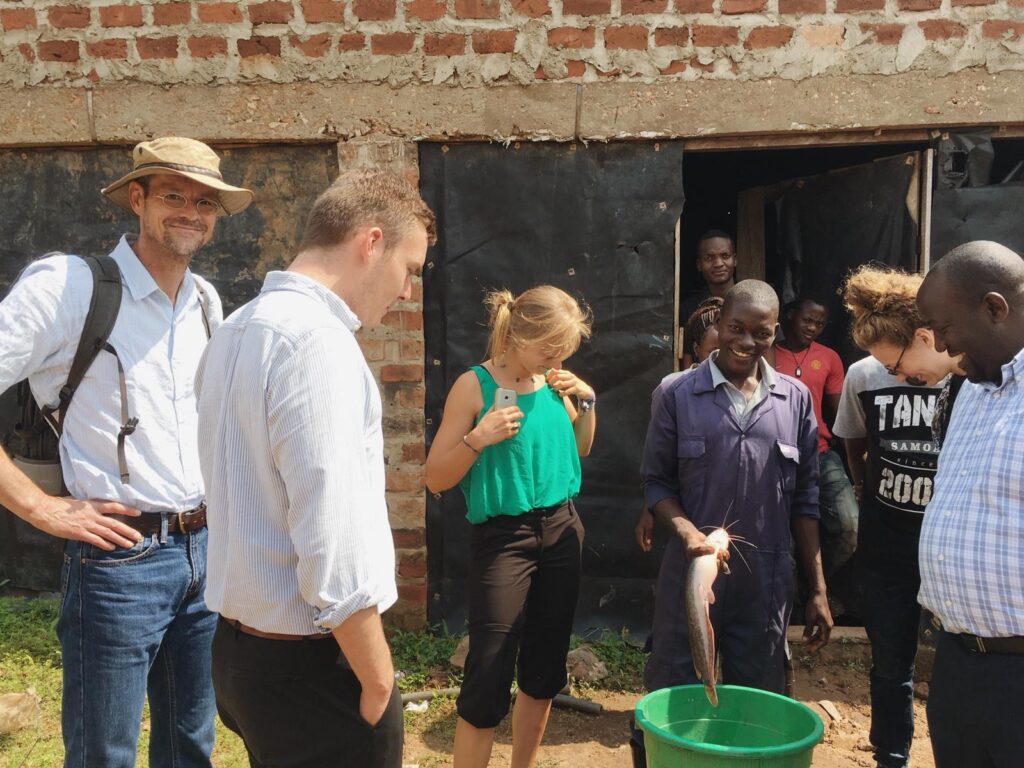
Visit to an aqua farm © SLE
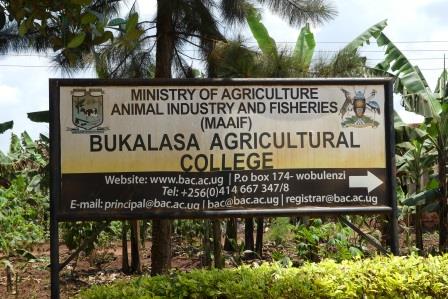
Bukalasa Agricultural College © SLE
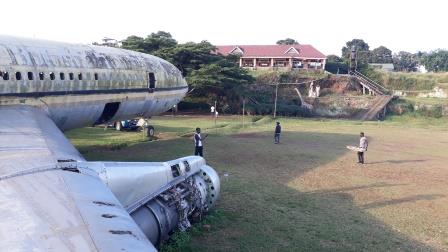
Memories of “Operation Entebbe” © SLE
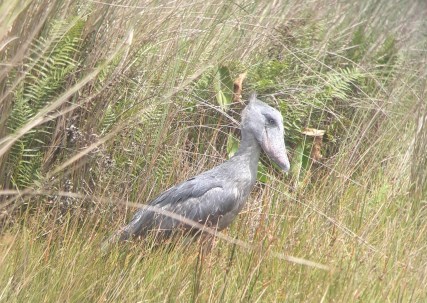
Rare shoebill, Lake Victoria © SLE

