

Training for International Cooperation in Times of Geopolitical Transformation – Rethinking Competencies, Instruments, and European Collaboration
Juli 29, 2026 2026-07-29 11:34Training for International Cooperation in Times of Geopolitical Transformation – Rethinking Competencies, Instruments, and European Collaboration
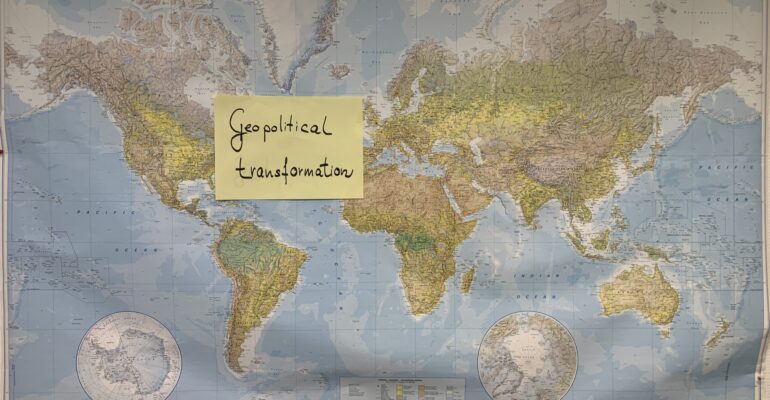
Training for International Cooperation in Times of Geopolitical Transformation – Rethinking Competencies, Instruments, and European Collaboration
Event information
When? 12.10.2026 from 10:00 AM – 04:00 PM
Where? Centre for Rural Development (SLE)
Robert-Koch-Platz 4
10115 Berlin
Participation is by invitation only upon request.
Contact: Ana Carolina Romano
Senior Executive at EADI: romano@eadi.org
More information: https://www.idos-research.de/en/events/details/training-for-international-cooperation-in-times-of-geopolitical-transformation/
About the Workshop
International cooperation is facing a new era of profound geopolitical and systemic transformation. After the end of the Cold War and periods of economic growth in various world regions, recent years have introduced far-reaching changes: a growing diversity of actors in international cooperation, significantly changed capacities and a stronger political agency among partner countries, and an increasingly geopolitically shaped and contested environment.
These shifts fundamentally reshape the context in which international cooperation takes place — and with it, the competencies required of professionals and leaders in the field, as well as the way we learn from each other in training.
This workshop brings together European training institutions that prepare professionals for careers in international cooperation. It aims to create a space for exchange, reflection, and joint learning on how we, as training institutions, can respond accurately and strategically to new realities in an increasingly volatile world.
What do transformations imply for the professional field of International Cooperation and, in turn, for the competencies taught and methods used in our programmes? Are competencies such as resilience, ambiguity tolerance, and adaptability becoming more central than in the past? How must we support lecturers, trainers, and programme staff in navigating growing complexity while maintaining impact orientation, motivation and quality? Do these developments also require us to rethink recruitment and selection processes for participants and students of our programmes?
Finally, the workshop will explore the European dimension of training for international cooperation. In light of shifting global power dynamics, what role should European training institutions play — individually and collectively? What are the lessons learnt from decades of research and training activities? Are there distinct schools of thought behind our established paths of analyses and training, and does it make sense to think and develop a stronger shared European perspective?
